2026 Upper Delaware River Rendezvous Presentations
Popcorn session - Latest updates from partners working across the Upper Delaware River watershed.
Keynote Speaker: Bernd Blossey - Invasive Species in the Upper Delaware River Watershed
Joy Damon, Cary Research Institute - Catskill Science Collaborative
Gian Dodici, U.S. Fish & Wildlife Service - Stream Habitat Restoration & Enhancement
Rachel Bakerian, NYSDEC Region 4 - Rare and Threatened Species of the Upper Delaware River Corridor
Justin Rocque - Water Infrastructure Insights in Sullivan County
Mitch Hull - Restoring and Repairing Septic Systems across the West of Hudson Watershed
Non-Contact Methods for Hydrologic Data in the Delaware River Basin, Chris Gazoorian
Drones for Monitoring Trout Habitat Conditions, Kyle Glenn
Amy McHugh, Office of the Delaware River Master - FFMP2017 Studies Overview
Elizabeth Brown, Delaware River Basin Commission - Water Resources Resilience Plan
Bernd Blossey - Japanese knotweed Impacts of the species and updates on biological control
John Thompson – Strategies to Address Knotweed at Different Scales
Miranda Kearney – Understanding Impacts and Finding Solutions for Knotweed Invaded Riparian Areas
Amber Gray - Two Years of Knotweed Management in Roscoe
Michael Buthe - Thermal Mitigation–A Data Analytics Perspective
Popcorn Session - Latest updates from partners working across the Upper Delaware River watershed.
Featuring:
Freshwater Turtle Inventory & Invasive Snail Project; Michelle Stevens, Upper Delaware River National Park Service
Understanding diadromous fish in and around the Delaware River; Dan Stitch, SUNY Oneonta
PFAS in the Delaware River Basin; Beth Brown, Delaware River Basin Commission
Coordinating Connectivity for the Upper Delaware Basin; Josh LaFountain
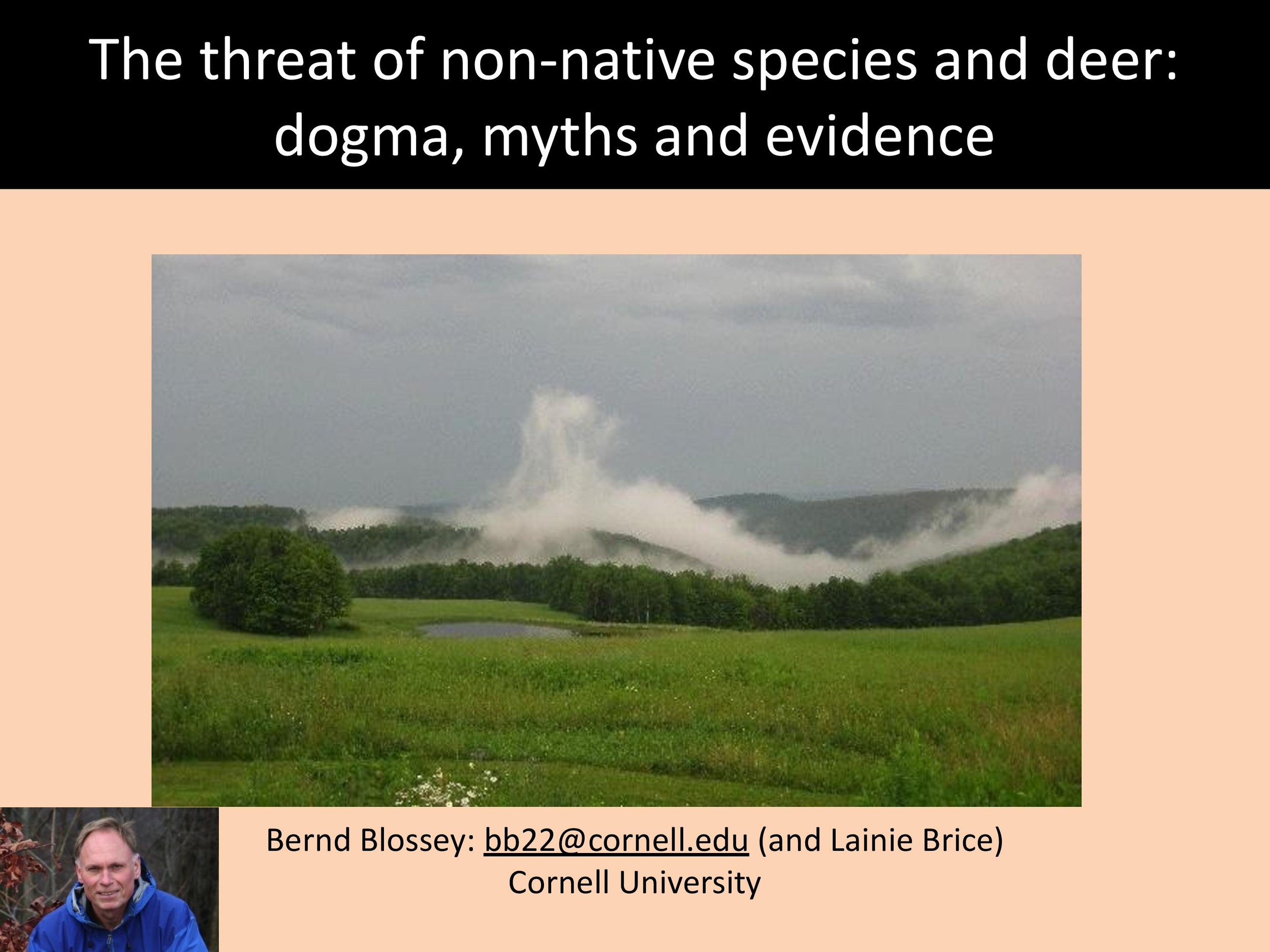
Keynote Speaker: Bernd Blossey - Invasive Species in the Upper Delaware River Watershed
Overview of the impact of invasive species and deer on individual species, conservation and land management.
The Endangered Species Act and the Threatened and Endangered Species of the Upper Delaware River Basin, Philip Mathias, U.S. Fish & Wildlife Service
This presentation will provide an overview of the Endangered Species Act (ESA) and its relevance to projects and activities within the Upper Delaware River watershed. It will highlight key ESA provisions, federally listed and proposed species in the watershed, their habitats and conservation concerns, and how species protection may intersect with restoration, infrastructure, water-resource management, and other projects. The presentation will also discuss the roles of the U.S. Fish and Wildlife Service and NOAA Fisheries and opportunities to incorporate species conservation into project planning.
Catskill Science Collaborative, Joy Damon, Cary Research Institute
This session will introduce the Catskill Science Collaborative, a group of individuals and institutions dedicated to facilitating collaboration and outreach by those doing environmental research in the Catskill Mountain region of New York State. The session will particularly focus on the CSC Fellowship program and summarize some past fellowship projects with particular relevance to the Upper Delaware River watershed.
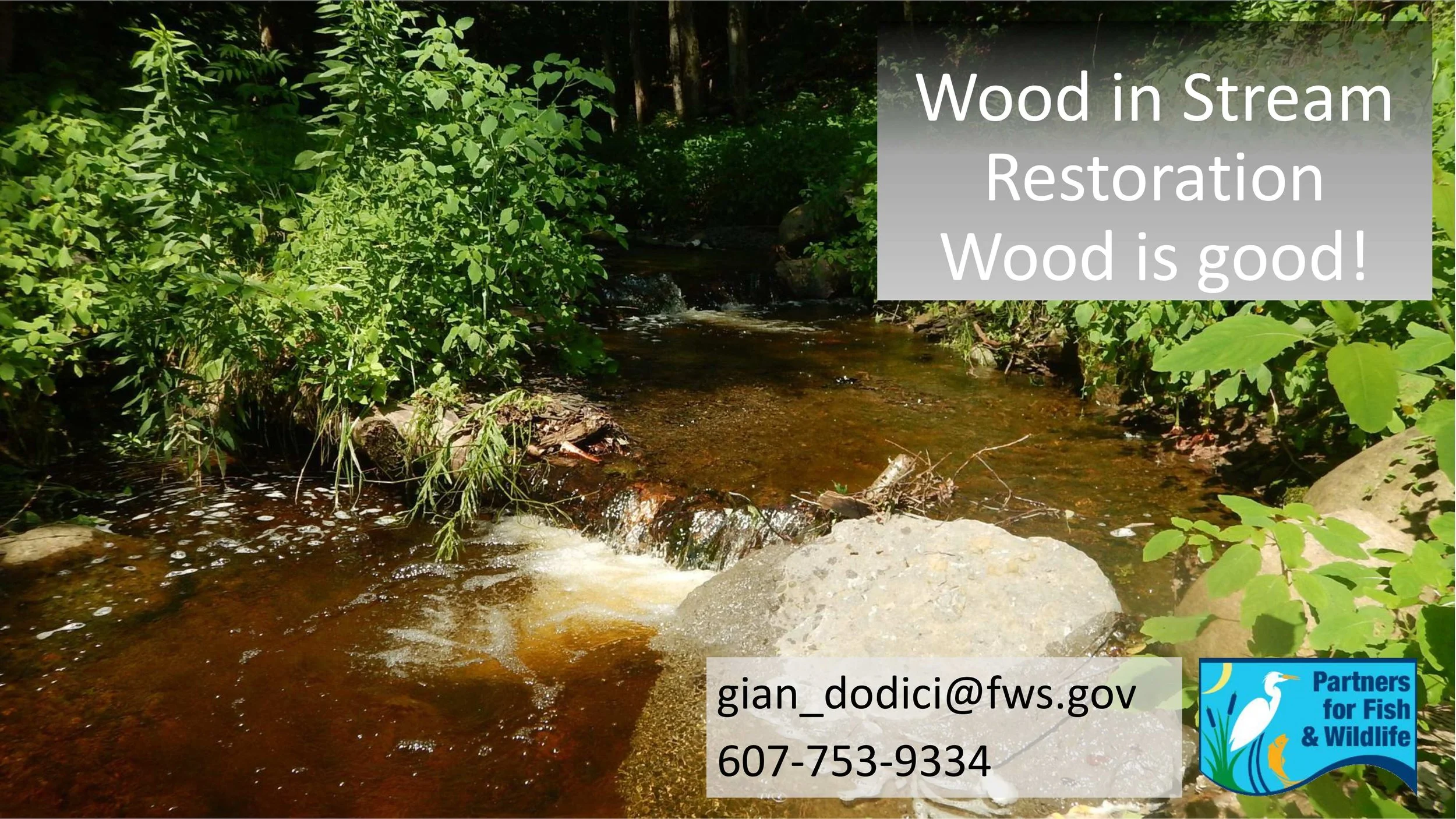
Stream Habitat Restoration & Enhancement, Gian Dodici, U.S. Fish & Wildlife Service
Stream habitat restoration projects focus on repairing or improving degraded stream systems by addressing issues such as erosion, channel instability, loss of riparian vegetation, poor water quality, and limited habitat structure.
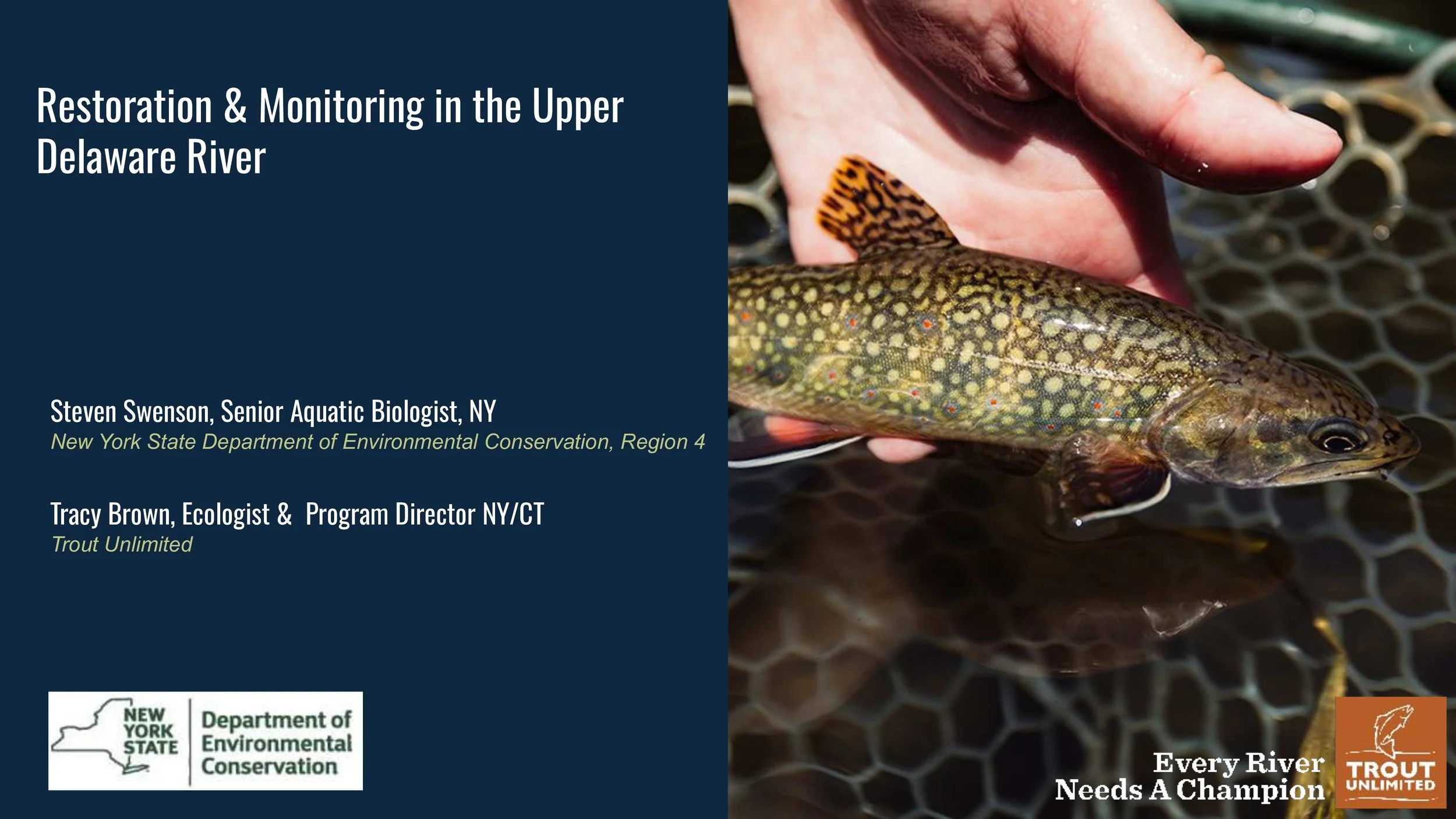
Restoration and Monitoring for Trout in the UDR, Steve Swenson, NYSDEC & Tracy Brown, Trout Unlimited
A look at the data, findings, and results from years of fisheries assessments and monitoring conducted by NYSDEC throughout the Upper Delaware River watershed. This presentation will highlight what these efforts have revealed about fish populations, habitat conditions, and changes over time.
A River Built on Change: The Geological History of the Upper Delaware, Neil Snedeker, Delaware Academy CSD at Delhi
The Upper Delaware River we are familiar with is the result of almost 400 million years of change. This session will take attendees on a brief journey through the geological history of the area and explore how those changes led to the formation of the river we see today.
Rare and Threatened Species of the Upper Delaware River Corridor, Rachel Bakerian, NYSDEC Region 4
An overview of rare and threatened species found throughout the Upper Delaware River corridor.
Delaware Tailwaters Annual Report Card: An Update on Progress towards Objectives of the Delaware Tailwater Joint Fisheries Management Plan, Chris VanMaaren, NYSDEC Region 4
An update on the joint management of the wild trout resources of the Delaware Tailwaters by NYSDEC and the Pennsylvania Fish and Boat Commission, including monitoring, habitat, outreach, and progress toward management objectives.
Species-Specific Population Genetics of Wild and Hatchery Brook, Brown, and Rainbow Trout in a Northeastern U.S. River, Alex Sotola, SUNY Oneonta
This presentation examines interactions and hybridization between hatchery-reared and wild brook, brown, and rainbow trout and explores species-specific genetic responses to hatchery environments.
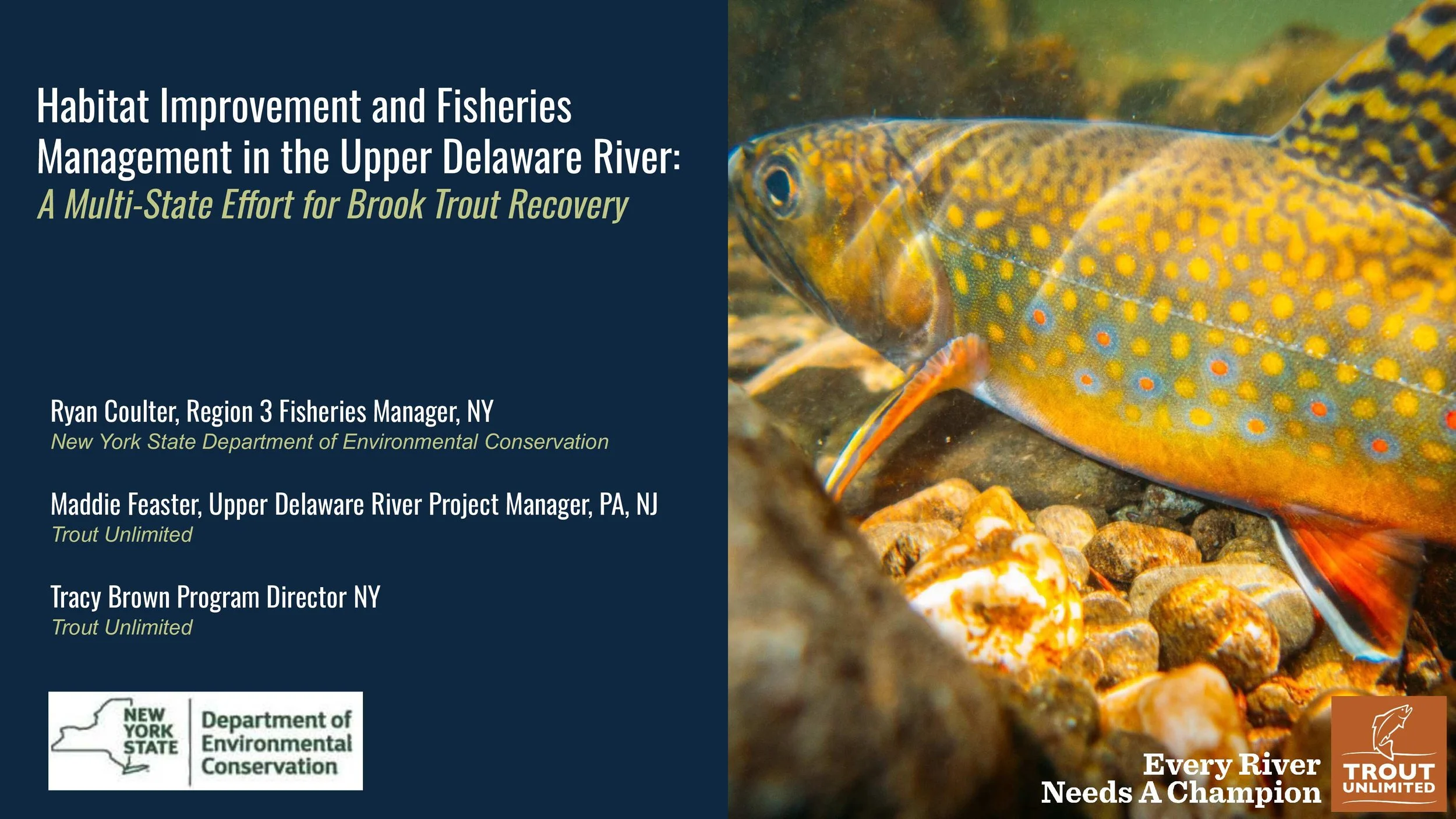
Habitat Improvement and Fisheries Management in the UDR: a Multi-State Effort for Brook Trout Recovery, Maddie Feaster & Tracy Brown, Trout Unlimited, Ryan Coulter, NYSDEC Region 3
An overview of the multi-state Upper Delaware River Eastern Brook Trout Initiative including Brook Trout management and habitat strategies and projects across the region.
Water Infrastructure Insights in Sullivan County, Justin Rocque
A discussion of Sullivan County's countywide assessment of potable water and wastewater infrastructure, including the project's approach, findings, and recommendations.
Restoring and Repairing Septic Systems across the West of Hudson Watershed, Mitch Hull
An overview of how the Catskill Watershed Corporation helps businesses and homeowners repair and restore septic systems, ultimately helping protect water quality throughout the watershed.
Non-Contact Methods for Hydrologic Data in the Delaware River Basin, Chris Gazoorian
This session will describe several non-contact methods being developed and adopted by the U.S. Geological Survey in the Delaware River Basin as part of the Next Generation Water Observing System project.
Drones for Monitoring Trout Habitat Conditions, Kyle Glenn
Review of work in the Upper Delaware River and across the state using drone technology.
Moving Mountains: Four Years of Bedload Transport Measurement in a Delaware Basin Tributary, Mike Coryat, Delaware County Soil & Water Conservation District
This session reviews results of a four-year study of bedload sediment transport in a gaged tributary of the West Branch Delaware River. PIT-tagged gravel, cobble, and boulders were tracked before and after flood flows, with results offering implications for stream restoration and fisheries management.
FFMP2017 Studies Overview, Amy McHugh, Office of the Delaware River Master
This session will provide an overview and status of studies identified in the Delaware Basin 2017 Flexible Flow Management Program and its 2023 amendment.
Water Resources Resilience Plan, Elizabeth Brown, Delaware River Basin Commission
An overview of the Delaware River Basin Commission’s Water Resources Resilience Plan, including its approach to addressing climate change, flooding, drought, and other emerging challenges to water resources. Learn how the plan aims to strengthen watershed resilience, protect water supplies, and support long-term water resource management throughout the Delaware River Basin.
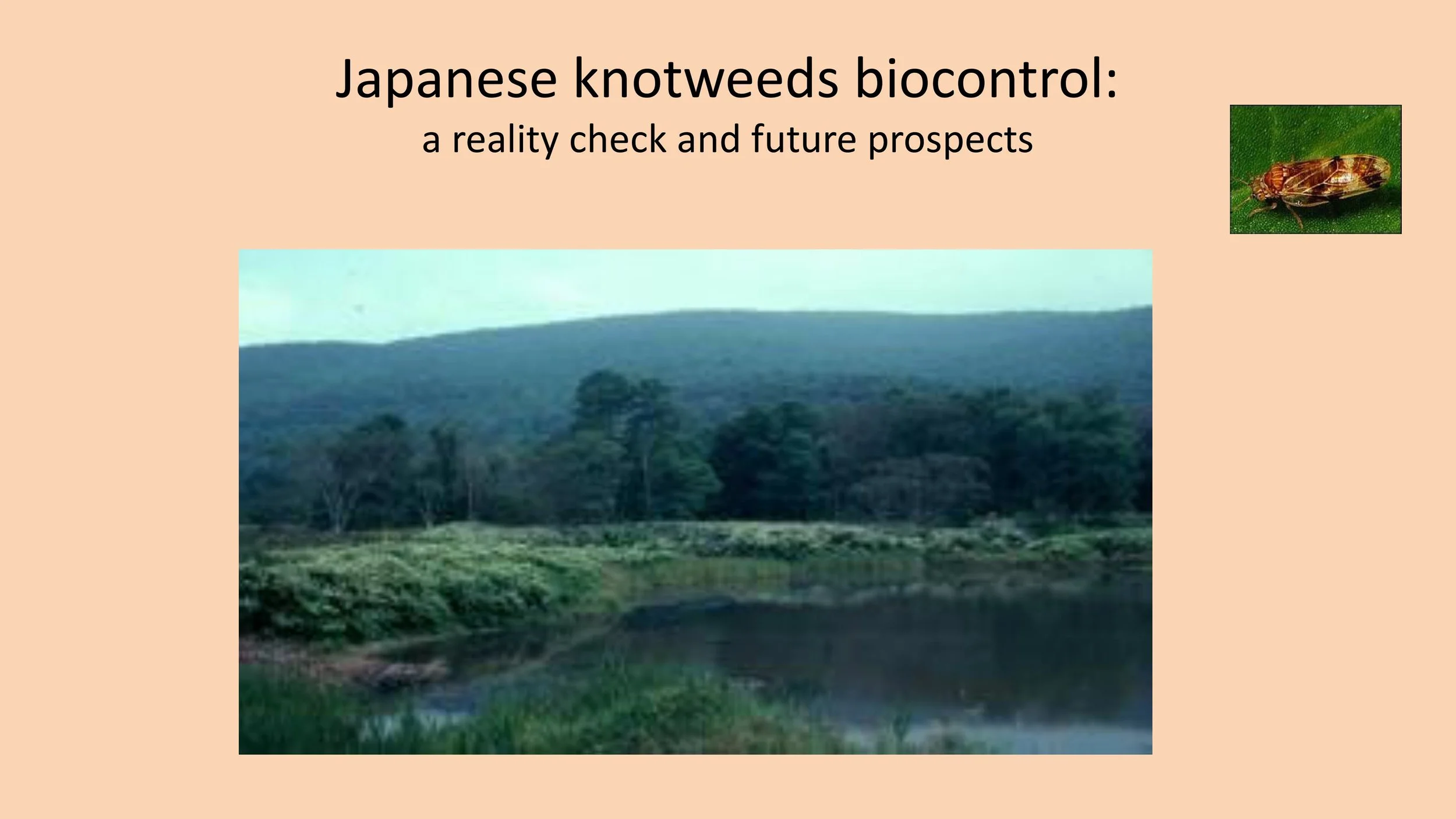
Bernd Blossey - Japanese knotweed
Impacts of the species and updates on biological control
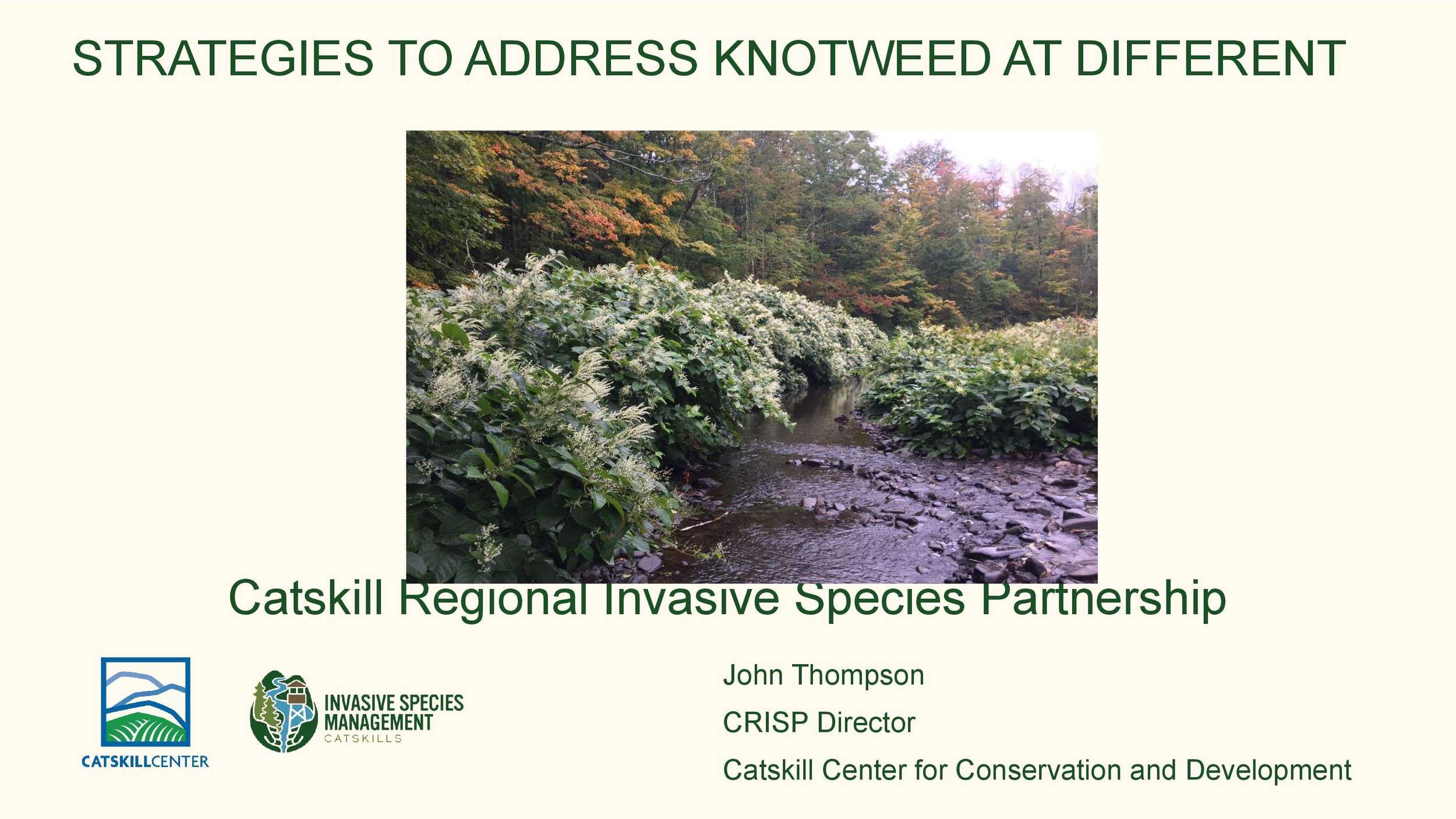
John Thompson – Strategies to Address Knotweed at Different Scales
Strategies to address knotweed at different scales
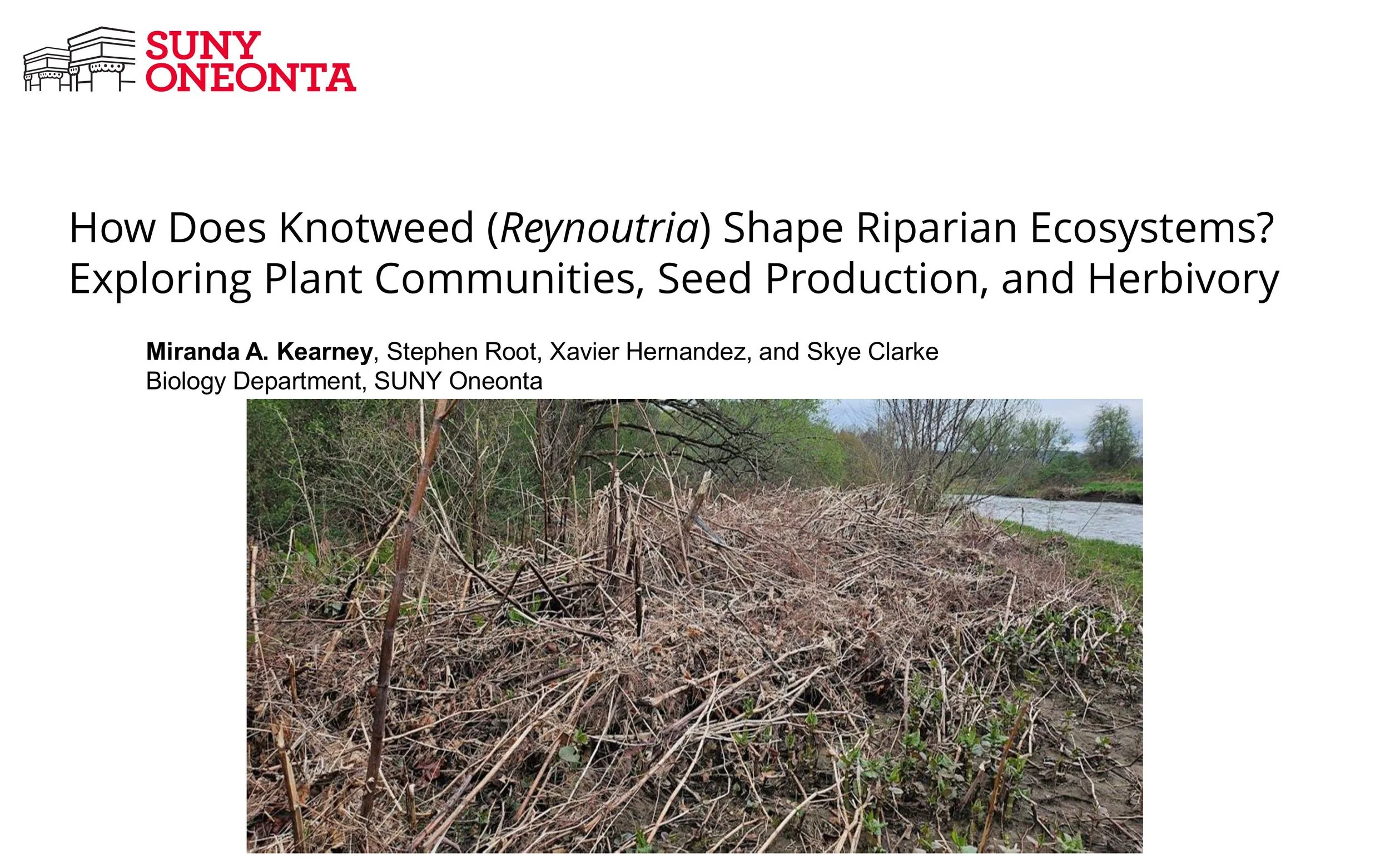
Miranda Kearney – Understanding Impacts and Finding Solutions for Knotweed Invaded Riparian Areas
Riparian zones play a vital role in maintaining the health and resilience of watersheds. This presentation will cover research investigating knotweed's effects on plant diversity and seedbank composition, as well as potential restoration strategies involving biochar and targeted planting of native vegetation.
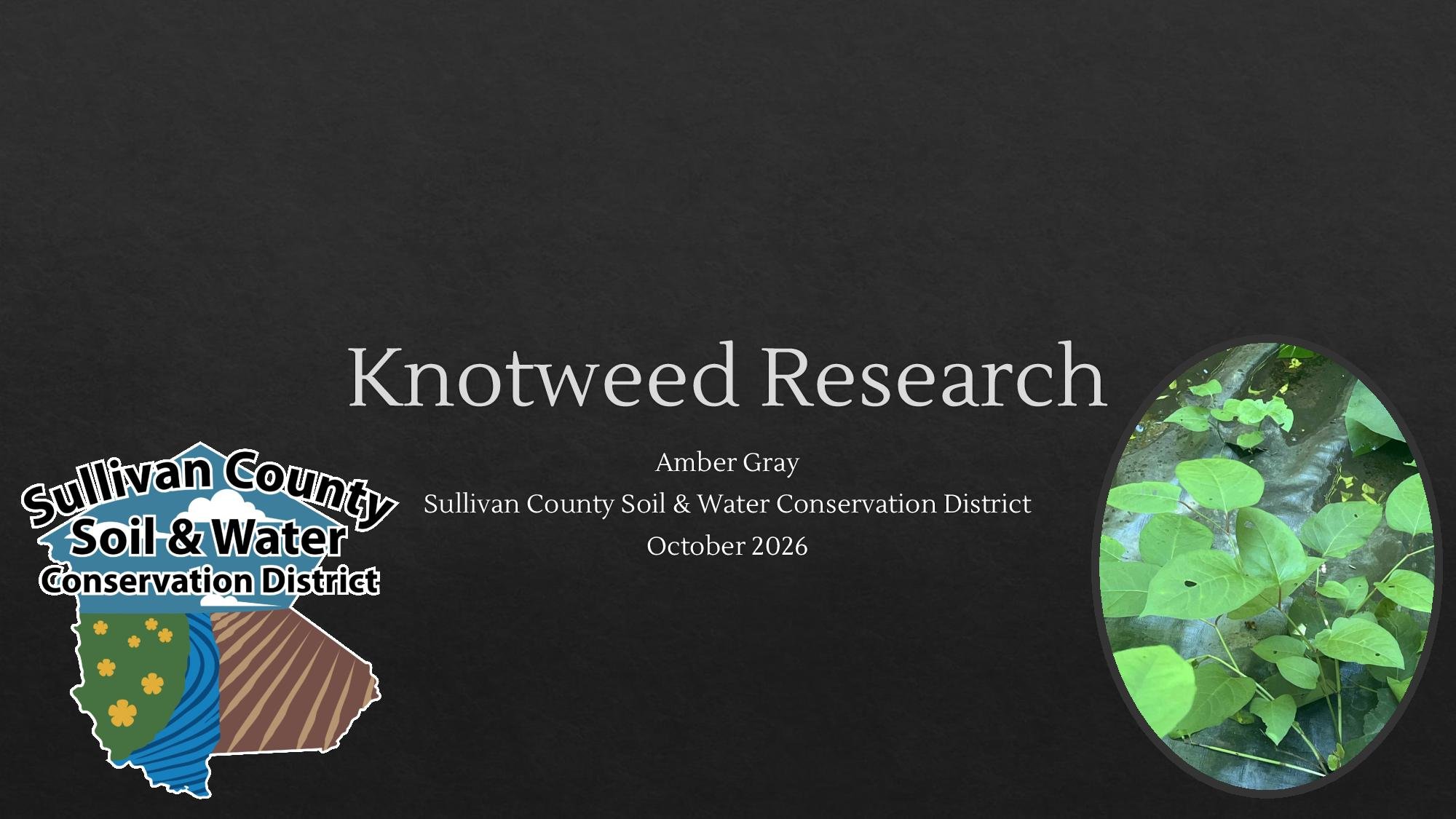
Amber Gray - Two Years of Knotweed Management in Roscoe
Amber has completed knotweed management research over the last two years and will present her findings.
Thermal Mitigation – A Data Analytics Perspective, Michael Buthe
Review of the history of thermal release improvements, their impact, and a look to the future.
Updates from NYC DEP, Adam Bosch